
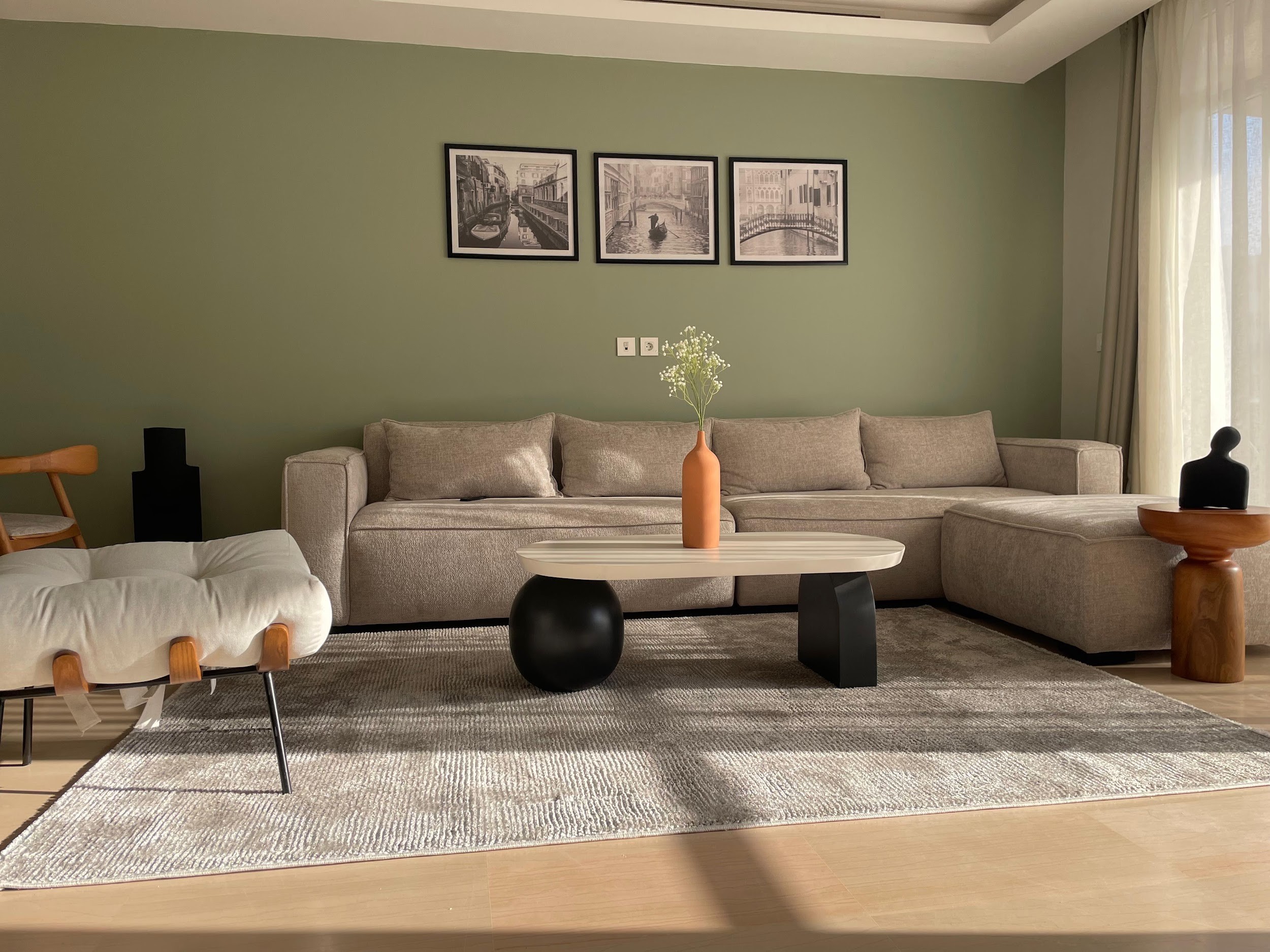
A rug does more than cover a floor. It defines a zone, connects furniture that would otherwise float, and changes how large a room reads. Placement matters as much as the rug itself.
In an open-plan space, a rug marks where one area ends and another begins without any physical division. In a conventional room, it pulls a furniture arrangement together into a group rather than several separate objects.
Understanding which of those you want determines the size and the position, and it is the step most people skip in favour of choosing a pattern.
Whatever the placement, the rug needs to stay in it. A pad cut to sit two or three centimetres inside the rug edge holds the whole thing flat, which is what prevents both sliding and the curled corners that develop at the edges.
Pads available across the standard rug sizes and trimmable with scissors, of the kind in the veken range, make this straightforward regardless of the rug’s dimensions.
The arrangement should relate to the seating. All furniture legs on the rug produces the most coherent result and needs the largest rug. Front legs only is the common and effective compromise. Everything off the rug works only in small rooms.
What consistently fails is a rug so small that it sits under the coffee table with a gap to every seat, which makes the furniture look scattered rather than grouped.
Rugs should generally align with the dominant furniture arrangement, which is not always parallel to the walls in an irregular room.
A rug set slightly askew reads as an accident rather than a choice, and this is one of the more common things people notice without being able to name.
A rug edge in a doorway is both a trip hazard and the fastest way to wear a rug, since every entry lands on the same spot.
Stopping short of doorways, and keeping edges out of the main walking line, extends the rug’s life and removes the hazard. Where an edge must sit in a route, a pad holding it flat prevents the curling that catches feet.
Marking the intended dimensions on the floor with masking tape and living with the outline for a couple of days costs nothing.
It corrects the instinct to buy too small more reliably than any rule, because it shows the relationship to the actual furniture in the actual room.
Once placed, rotating a rug periodically distributes wear and light exposure evenly.
Rugs fade unevenly where sunlight falls, and the pattern of wear from a walking route becomes permanent. A half-turn twice a year prevents both.